Augharan School
The Greatest Beer Run Ever: A Memoir of Friendship, Loyalty, and WarAugharan School was the narrator’s nearby school during the family’s move to a house above a bog, but its short distance from home offered no comfort. His father supported sending him there, where harsh corporal punishment made school a daily ordeal. The narrator’s eventual departure was tied to his First Communion and his hope of rejoining his mother and the twins at Beaghmore.
Setting and daily journey
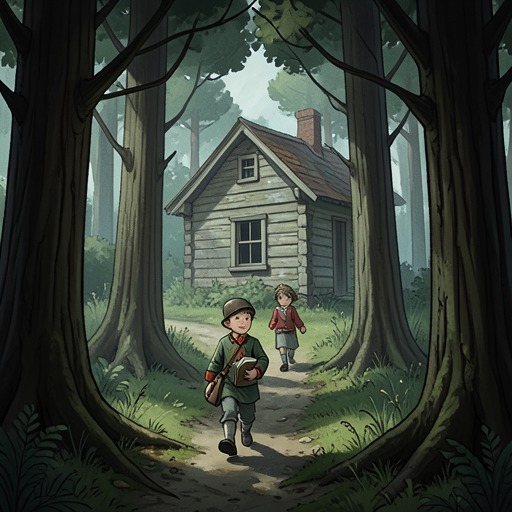
After the number of pupils fell at Lisacarn School, the narrator’s mother was placed on the teacher panel and transferred to Beaghmore School, ten or eleven miles away. The family left its bungalow for a stark two-storeyed house overlooking a bog near Cloone. His mother walked the two miles to Beaghmore in all weathers with the twins, while the narrator went in the opposite direction to Augharan School, about half a mile away on the road to Newtowngore. The convenience of the route did not make it welcome: there were mornings when he wished the school were a hundred miles away.
His father had long complained that his mother spoiled him and the other children. He regarded the nearby school as an opportunity to separate the boy from his mother’s care and expose him to what he considered the natural harshness of the world. The narrator’s attendance at Augharan thus reflected not only where the family lived, but also his father’s view of how a boy should be raised.
Discipline and the narrator’s experience
Mrs McCann, the junior teacher, cycled each day between Augharan and Carrigallen, where her husband worked as a tailor. She kept bright yellow bamboo canes in a press; when they splintered, she cut replacements from ash, sally, and hazel hedges. She used them for oral and written errors, lapses of attention, and even slight indiscipline. The worst punishments took place in the corridor, away from the classroom.
The narrator did not believe he was beaten more than the other children, but he was unused to being struck. After his mother’s gentleness, the punishment felt to him like a descent into hell. He tried fiercely to leave Augharan and accompany his mother and the twins to Beaghmore, but his efforts failed. His private reaction to the school’s misery was to pray after the Rosary that a German plane might stray over England and drop a bomb on Augharan while the pupils slept—a child’s desperate fantasy, formed amid constant talk of the war in Britain and Europe.
Thistles, First Communion, and departure
On the way to school, the narrator began looking at wild flowers beside an abandoned cottage. Their names recalled walks with his mother on the lane to Lisacarn, and gathering them also delayed his arrival at Augharan. Hoping to win Mrs McCann’s favour, he entered the overgrown garden and picked purple thistles, which he thought as lovely as roses. Nettles stung him and briars tore his hands and legs. Mrs McCann initially accepted the flowers in amazement, but when she recognized the thistles and felt their thorns, she grew angry and ordered him to throw them out. His attempt at reconciliation instead deepened his humiliation.
When he showed his mother his torn legs and wrists and told her what had happened, she laughed, as did his sisters. Then she drew him to her and offered a way out: if he learned his catechism and received First Confession and Communion, he could leave Augharan and go with her and the twins to Beaghmore. He had only a month to wait. The promise turned the school’s routine into a countdown, linking his religious preparation to the possibility of reunion with his mother.
Mrs McCann’s husband made the blue suit the narrator wore for his First Communion. The evening before, his mother took him to the dark church at Aughavas for confession; the next morning, Mrs McCann shepherded the class to the altar rail, where the children received the wafer. After the ceremony, the narrator was given coins that jingled in his suit pockets. On the journey home in a farm’s sidecar, he was at first too frightened by the height to look down at the road or the horses’ hoofs, but gradually began to enjoy the wide view. The school’s part in his story ended at this threshold: after Communion, he could leave Augharan and join his mother and the twins at Beaghmore.